Photo: hector espinoza / Unsplash (Unsplash License)
Quick Answer: Galaxy Digital’s Helios campus in Dickens County used to be a bitcoin mine. It is now an AI data center with more than 1.6 gigawatts of power approved by ERCOT. CoreWeave has leased all 800 MW of gross power in the first three phases, and Galaxy says those 15-year leases should bring in more than $1 billion a year on average. As of November 2026, Phase I (133 MW of IT load) is earning rent, Phase II (260 MW) is being built with $3.5 billion of new debt, and the 830 MW Helios II expansion still has no tenant.
The most advanced conversion of a bitcoin mine to AI in Texas is not in a metro area. It is east of Lubbock, in Dickens County, where the whole county tax base is about $500 million. Galaxy Digital (Nasdaq: GLXY) calls its Helios campus the cornerstone of the company. The third-quarter 2026 results, released October 27, were the first to include a full quarter of CoreWeave rent from the site. Below is where Helios stands as of late November 2026.
What is the Helios data center campus?
Helios was built in 2020 as a bitcoin mining facility and was previously operated by Argo Blockchain. Galaxy bought the site in 2022 and has spent the past two years turning it into a campus for AI and high-performance computing (HPC). In July 2026 Galaxy said the campus covered more than 2,200 acres in West Texas. A state construction filing puts one of the new buildings at 1003 FM 193 near Afton in Dickens County.
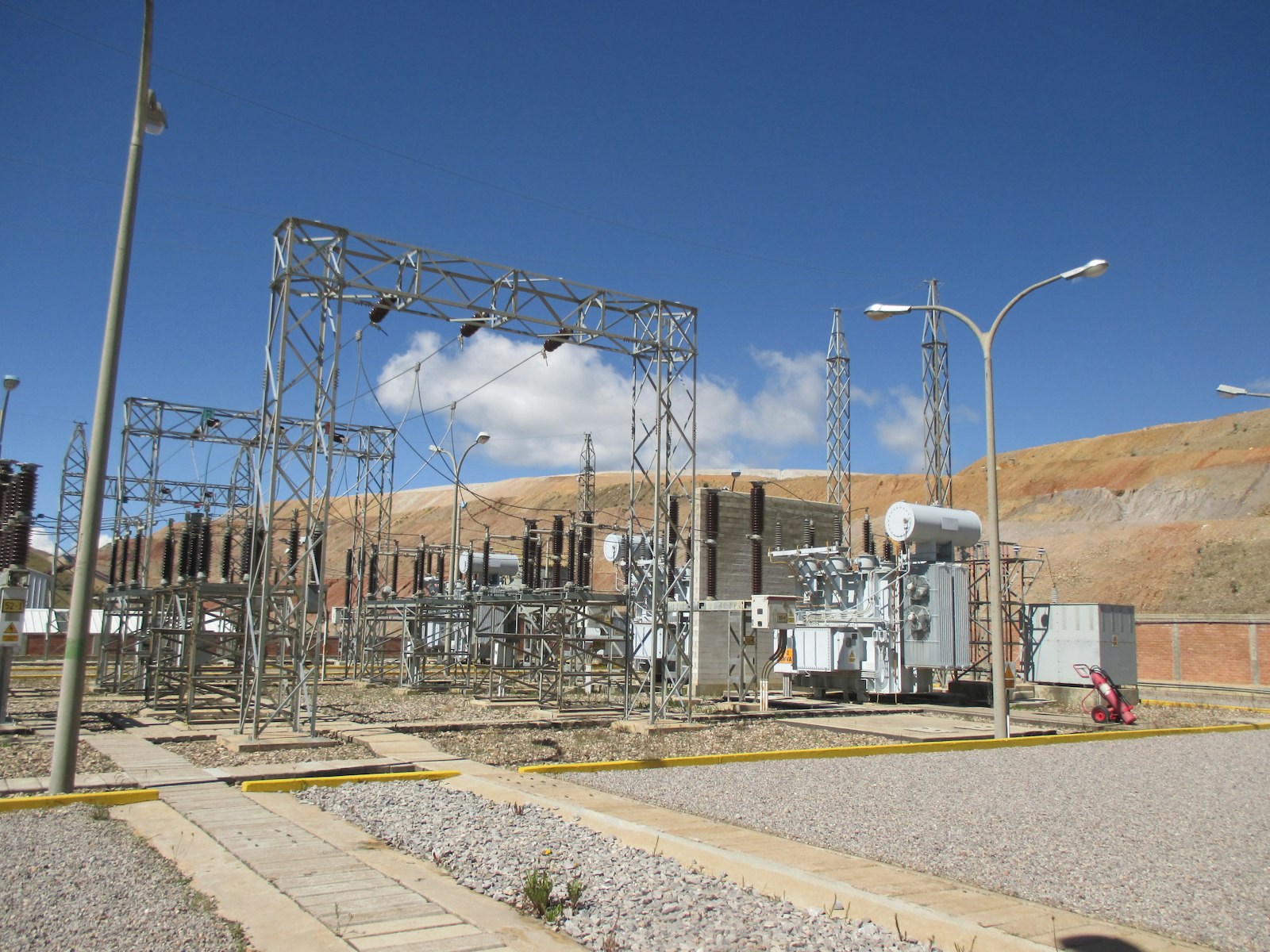
American Electric Power’s AEP Texas supplies electric service to the site. Galaxy has named Wind Energy Transmission Texas (WETT) as the transmission interconnection provider.
Helios at a glance
| Item | Detail (as of Nov. 2026) |
|---|---|
| Location | Dickens County, West Texas (near Afton) |
| Campus size | More than 2,200 acres |
| Approved power | About 1.63 GW (ERCOT-approved, studied and utility-contracted) |
| Stated full-buildout potential | Up to 3.6 GW |
| Anchor tenant | CoreWeave: 526 MW critical IT load (800 MW gross) |
| Lease term | 15 years plus two five-year extension options |
| Expected revenue | More than $1 billion average per year at full utilization |
| Delivered to date | 133 MW critical IT load (about 200 MW gross) |
| Utility / transmission | AEP Texas / Wind Energy Transmission Texas |
How much power has ERCOT approved for Helios?
The campus began its conversion with 800 MW of approved capacity, and CoreWeave contracted all of it. On January 15, 2026, Galaxy said it had finished ERCOT’s Large Load Interconnection Study (LLIS) for an additional 830 MW. Galaxy also signed a service agreement with AEP Texas for the new load. That approval roughly doubled the campus’s approved capacity to more than 1.6 gigawatts. CEO Mike Novogratz called the approval “a watershed moment” for the company.
Galaxy says the site could eventually scale to 3.6 GW.
What did ERCOT’s “Batch 0” process mean for Helios?
ERCOT has started assigning large new loads to study batches, and Galaxy’s projects are part of that process. On the October 27 call, Galaxy President and Chief Investment Officer Ferraro said five Galaxy projects in Texas had received conditional Batch 0 classifications covering about 4.2 GW. That total includes more than 1.6 GW of baseload capacity at Helios 1 and 2. Three expansion projects, named Caspian, Saleen and Helios 3, were classified as studied load for another 2.6 GW. Ferraro said the company expects “greater clarity on power allocation and anticipated energization timelines for these projects in April 2027.” He mentioned Governor Abbott’s September directive and said Galaxy does “not currently expect an impact to our construction progress or our anticipated energization timelines.” Across the whole company, Galaxy now reports a gross power pipeline of more than 5.7 GW.
What has CoreWeave leased at Helios?
The CoreWeave relationship was built in three steps during 2025. Galaxy signed the first-phase lease early that year. In August 2025 CoreWeave signed a second lease for 260 MW of critical IT load on similar terms, and it then exercised its last option for another 133 MW. Together, the three phases come to 526 MW of critical IT load. That uses “the full 800 MW of gross power currently approved and contracted at Helios,” in Galaxy’s words.
| Phase | Critical IT load | Tenant | Status / timing | Funding |
|---|---|---|---|---|
| Helios I, Phase I | 133 MW (~200 MW gross) | CoreWeave | Delivered by end of Q2 2026; rent began Q2 2026 | $1.4B facility + $350M Galaxy equity |
| Helios I, Phase II | 260 MW (400 MW utility capacity) | CoreWeave | Under construction; data halls from Q2 2027 | $3.507B senior secured notes |
| Helios I, Phase III | 133 MW (final option) | CoreWeave | Option exercised 2025 | Equity-funded; debt sought 1H 2027 |
| Helios II | 830 MW approved (gross) | None yet | Energization expected mid-2028 | Not disclosed |
Galaxy said on July 6, 2026 that it had delivered the first phase on schedule: about 200 MW of gross power, including 133 MW of critical IT load. Its third-quarter release confirmed that all 133 MW had been handed to CoreWeave by the end of the second quarter.
Why is Helios II still unleased?
The 830 MW expansion approved in January does not have a tenant yet. The third-quarter release lists “an additional 830 MW of approved capacity at Helios II not yet under lease.” On the call, Novogratz said Galaxy “decided not to move forward on the terms being considered,” and added, “we’re not going to compromise on terms just to meet an announcement date.” Ferraro said the company “proactively chose not to because of the change in market dynamics.” He pointed to tight power supply, project delays and lease structures that put “investment-grade wraps” on tenants that are not investment grade. Ferraro said energization for Helios II is expected in mid-2028. He also said about $230 million in deposits and purchase orders is committed for Helios II electrical infrastructure.
How is Galaxy financing Helios?
Galaxy has financed Helios phase by phase, with each loan secured by that phase’s assets.
Phase I: a $1.4 billion project loan
On August 15, 2025, Galaxy closed a $1.4 billion project financing facility. The loan was sized at 80% of cost, runs 36 months and is secured by all first-phase assets. Galaxy contributed the $350 million equity share. In October 2025 the company raised another $460 million to speed up the conversion.
Phase II: $3.5 billion of high-yield notes
On July 23, 2026, Galaxy priced $3.507 billion of senior secured notes. The issuer is Galaxy Helios Data Centers II LLC, an indirect wholly owned subsidiary. The notes pay 9.875% a year, mature August 1, 2031, and begin amortizing at 4% a year starting at least ten months after the project is finished. They are backed by first-priority liens on substantially all of the issuer’s and guarantor’s assets. According to the offering release, the project consists of two buildings with eight data halls, 400 MW of utility capacity and 260 MW of critical IT capacity, on about 260 acres in Dickens County.
Phase III and spending pace
Chief Financial Officer Paquette said on the October call that “phase three is fully equity funded through the project” and that Galaxy intends to seek debt financing in the first half of 2027. Data center capital spending was $757 million in the third quarter, up from $448 million in the second. Paquette said a significant share of the remaining construction spending will fall in the first half of 2027.
What did Helios contribute to Galaxy’s Q3 2026 results?
The third quarter of 2026 was the first full quarter of CoreWeave rent at Helios.
| Data Centers segment metric | Q2 2026 | Q3 2026 |
|---|---|---|
| Data center leasing revenue | n/a (Q3 2025: $0) | $79.1 million |
| Revenues and gains from operations | $26.0 million | $89.0 million |
| Adjusted gross profit | $20 million | $79 million |
| Adjusted EBITDA | $11 million | $69 million |
| Quarterly capex | $448 million | $757 million |
| Segment total assets | $2.5 billion | $6.8 billion |
| Segment total liabilities | $1.5 billion | $5.3 billion |
For the company as a whole, Galaxy reported third-quarter net income of $323 million ($0.66 per diluted share), compared with a $85 million loss in the second quarter. Adjusted EBITDA was $455 million. Data centers now account for about 48% of Galaxy’s $3.0 billion in equity capital. The $79 million in quarterly lease revenue comes from Phase I alone, which is about a quarter of the CoreWeave IT load. That is why Galaxy’s projection of more than $1 billion a year depends on Phases II and III being finished.
What tax abatement did Dickens County approve?
On July 28, 2025, the Dickens County Commission signed a $20.5 million abatement agreement with Galaxy, according to The Texas Spur. It consists of $18.5 million in payments in lieu of taxes (PILOT) and another $2 million for housing, and it offsets expected property taxes over ten years. The first PILOT payment of $500,000 and the $2 million housing payment were both due October 1, 2026. A separate board manages the housing money. The agreement covers the first phase, which is valued at about $1 billion and has 200 MW of gross power capacity.
The local stakes are large. The Spur reported that Galaxy is the county’s largest taxpayer. The county also adopted a 20% homestead exemption for its roughly 528 homestead filers. County Judge Kevin Brendle said the county is “focusing on this industry long-term.” He also warned that if housing is not built, workers will commute.
How many jobs will Helios create?
Galaxy told the county it expects more than 100 permanent jobs at Helios, and the Spur reported that CoreWeave may add 50 or more. Galaxy has not published an updated headcount since those 2025 figures.
What do state construction records show?
The Texas Department of Licensing and Regulation keeps an architectural barrier registry, and one of its entries lists a project called “Galaxy Helios Phase 2” (facility name “Helios 3”). The owner is Galaxy Helios II LLC. The entry describes a one-story data center and office building of 349,594 square feet with an estimated cost of $1.3 billion. It was registered March 13, 2026, with a start date of April 6, 2026 and a completion date of August 29, 2027. That timing fits Galaxy’s guidance of Phase II data hall deliveries starting in the second quarter of 2027.
Is Helios part of a broader shift from bitcoin mining to AI in Texas?
Yes. Mining sites already have grid connections, substations and land, and Helios is the furthest along: it has a signed tenant, debt in place and rent coming in. Other miners, including Riot Platforms, are trying similar landlord models. Galaxy is also expanding elsewhere in Texas. On July 28, 2026 it announced a roughly 500-acre campus in McGregor, near Waco, with an initial 74 MW phase expected to get power in 2028.
Brian’s Take
Helios is the clearest test so far of whether a remote bitcoin mine can become long-lease AI real estate. The numbers suggest it can, with one caveat. Phase I is producing about $79 million a quarter on 133 MW, and Galaxy has signed CoreWeave to 15-year terms on 526 MW. That contracted revenue is what made it possible to borrow $3.5 billion. The cost is a 9.875% coupon, and Galaxy’s data center segment went from $1.5 billion to $5.3 billion of liabilities in a single quarter. That leverage depends on Phase II data halls arriving on time in 2027.
I give management credit for walking away from Helios II terms it didn’t like, and I also see the cost of that decision. For now, 830 MW of approved power has no tenant, ERCOT’s batch process won’t settle allocations until April 2027, and about $230 million is already committed to electrical equipment. For Dickens County, a $500 million tax base is now tied to one company and one tenant relationship. The housing money in the abatement shows local officials understand that.
Frequently Asked Questions
Where is Galaxy’s Helios data center?
Helios is in Dickens County, West Texas, east of Lubbock. A state filing lists one building at 1003 FM 193 near Afton. The campus covers more than 2,200 acres.
Who is the tenant at Helios?
CoreWeave has leased 526 MW of critical IT load across three phases, which equals 800 MW of gross power. The leases run 15 years with two five-year extensions. The 830 MW Helios II expansion has no tenant yet.
When will Phase II be finished?
Galaxy expects Phase II data hall deliveries to begin in the second quarter of 2027. A state filing lists a completion date of August 29, 2027 for one Phase II building.
Did Helios get a tax break?
Yes. In July 2025 Dickens County approved a ten-year, $20.5 million abatement package. It includes $18.5 million in PILOT payments and $2 million for local housing.
Sources and Further Reading
- Galaxy Announces Third Quarter 2026 Financial Results, Galaxy Digital Inc. (press release, October 27, 2026)
- Galaxy Digital Q3 2026 Earnings Call Transcript, Galaxy Digital Inc. (via Webull)
- Galaxy Completes ERCOT Interconnection Studies and Secures Approval for Additional 830 Megawatts at Helios, Galaxy Digital Inc. (press release, January 15, 2026)
- Galaxy Completes Phase I of Its Helios Data Center Campus, Delivering 133 Megawatts of Critical IT Load to CoreWeave, Galaxy Digital Inc. (press release, July 6, 2026)
- Galaxy Closes $1.4 Billion Project Financing Facility to Accelerate Helios AI Datacenter Development, Galaxy Digital Inc. (press release, August 15, 2025)
- Galaxy Digital Inc. Announces Pricing of $3.507 Billion of Senior Secured Notes, Form 8-K Exhibit 99.1, U.S. Securities and Exchange Commission
- $20.5M Tax Abatement Paves Way for Galaxy Growth in Dickens County, The Texas Spur
- Dickens County Taxpayers to See 20% Cut as Communities Prepare for Galaxy Growth, The Texas Spur
- TABS Project Registration TABS2026014893: Galaxy Helios Phase 2, Texas Department of Licensing and Regulation
- Galaxy Digital Buys 500 Acres in McGregor for Second Texas AI Data Center Campus, The Block
- Galaxy Profit Jumps 1,500% in Record Quarter as Novogratz Calls Helios AI-Compute Campus Its “Cornerstone,” The Block (October 2025)