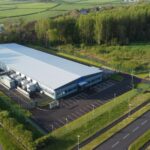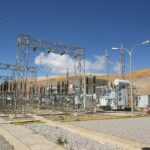
Photo: Jan Kohl / Unsplash (Unsplash License)
Quick Answer: As of November 2026, the largest Central Texas data center projects are a planned 1-gigawatt campus outside Taylor in Williamson County, EdgeConneX’s campuses in Cedar Creek in Bastrop County, and Rowan Digital Infrastructure’s 300 MW campus in Temple. Local governments are using annexation and tax agreements to set conditions on these projects. San Marcos has banned data centers outright, and several nearby counties are pushing back over water.
In 2026, data center projects measured in hundreds of megawatts and billions of dollars moved forward in Williamson, Bastrop and Bell counties, while Hays County and San Marcos moved to slow or block the industry. This article covers who is building, what local governments got in exchange, and what CBRE’s market data shows, based on records and reporting through mid-November 2026.
Which major data center projects are underway in Central Texas?
Three projects stand out for their size and stage of approval. Each is in a different county, and each was approved through a different local tool.
| Project | County / location | Developer | Size | Investment / value | Local approval |
|---|---|---|---|---|---|
| Taylor Technology Campus | Williamson; east of Taylor between FM 112 and US 79 | Big Watt Digital and PowerHouse Data Centers | About 664 acres; up to 1 GW (500 MW plus 500 MW option) | $4.8B estimated economic impact; about $1.3B city tax revenue, 2027–2046 (developer estimates) | Taylor City Council annexation and economic development agreement, October 2026 (unanimous) |
| EdgeConneX Cedar Creek | Bastrop; FM 535, Cedar Creek | EdgeConneX | About 112 acres in the tax deal; three campuses of nearly 1,500 acres in total | About $4B total; $1.4B in improvements | Bastrop County Commissioners Court tax agreement, March 2026 (unanimous) |
| Rowan Temple campus | Bell; Bob White Road, south Temple | Rowan Digital Infrastructure | More than 700 acres; up to 300 MW | $700M | Temple City Council voluntary annexation, September 2025 (unanimous); construction began January 2026 |
| BCG Cedar Creek Campus / Pacifico CCK Energy 1 | Bastrop; Cedar Creek | Black Chamber Partners and Pacifico Energy | 2,842 acres (data center plus power development) | Not disclosed | TCEQ stormwater construction permits issued; challenged by neighbors in July 2026 |
What is planned at the Taylor Technology Campus?
The biggest project in the region by stated capacity is the Taylor Technology Campus. Big Watt Digital and PowerHouse Data Centers are developing it on about 664 acres just east of Taylor’s city limits, in what is now unincorporated Williamson County. PowerHouse is the data center division of American Real Estate Partners. According to CommercialSearch, the campus is planned for up to 1 gigawatt of power capacity at full build-out. The city agreement covers an initial 500 MW, with an option for another 500 MW.
Construction is slated for 2027 through 2029, with initial power expected in the first half of 2028. The site has fiber, high-voltage transmission and natural gas resources to support large-scale behind-the-meter generation. That means power plants built on the campus to serve the data centers directly. KUT reported that the project includes an on-site power plant. Neither report gave its size or specifications.
What did Taylor get in the agreement?
The Taylor City Council unanimously approved an annexation agreement, reported by KUT on October 9, 2026. City officials said the city would have no authority over the project without the agreement, because the land sat outside city limits. Under the agreement, the city will regulate the campus’s water use, noise and air quality.
The developers have committed about $28.2 million in local investments. More than $10 million of that is for Taylor ISD and local students, and the rest covers workforce development and nonprofit contributions. They will also pay for improvements to Taylor’s reclaimed-water system and have committed to reducing discharges into Mustang Creek. The developers project nearly $1.3 billion in cumulative gross tax revenue for the city from 2027 through 2046 and $4.8 billion in economic impact. They also cite 19,000 construction-related full-time jobs across Williamson County. These figures are the developers’ own estimates.
In August, Taylor’s Planning and Zoning Commission delayed the original application by 90 days, and the developers withdrew it about two weeks later before returning with the negotiated agreement. Many residents objected to the closed-door talks, the project’s pace and gas-fired generation.
Why Taylor?
CommercialSearch notes that Samsung’s $17 billion semiconductor plant is a key driver of growth in the area. Big Watt Digital reports more than 2 GW under construction in Texas and South Dakota, and PowerHouse reports about 10 GW under construction or planned across nine U.S. markets.
What is EdgeConneX building in Bastrop County?
EdgeConneX, a data center operator based in Virginia, has become Bastrop County’s largest data center player. In March 2026, the Bastrop County Commissioners Court unanimously approved a tax agreement for an EdgeConneX project on about 112 acres along FM 535 in Cedar Creek, according to the Elgin Courier. The company estimates a total investment of about $4 billion, including $1.4 billion in improvement costs. It plans to build in four phases over five to eight years.
What are the tax terms and projected revenues?
The Elgin Courier reported that the exact abatement terms, including the percentage and length, were not made public. The projected revenues were: about $7 million for Bastrop County and $100 million for Bastrop ISD over 10 years. The land currently brings in about $25,000 a year in property tax. The company expects about 60 permanent full-time jobs and nearly 400 construction workers, and said it would hire locally. One commissioner explained the county’s reasoning by saying taxes are pretty much the only tool the county has to get what it wants from a project like this.
Community Impact reported that EdgeConneX is developing three Cedar Creek campuses covering nearly 1,500 acres. CoreWeave is expected to occupy the first building, valued at $440 million, which was expected to open in August 2026. At Commissioner David Glass’s request, EdgeConneX held three public meetings on June 16, 17 and 18, 2026, in Elgin, Smithville and Bastrop. They covered water use, infrastructure planning and community impacts.
What other projects are proposed in Cedar Creek?
About 7 miles from the EdgeConneX campuses, Black Chamber Partners and Pacifico Energy have proposed a 2,842-acre data center and power development. The Texas Commission on Environmental Quality (TCEQ) issued two state construction stormwater permits for it. The Black Chamber permit lists a construction period from September 1, 2026, to October 1, 2028. On July 20, two neighboring couples whose properties are surrounded by the site filed motions asking TCEQ to overturn the permits. They cited drainage, hydrology and runoff, and said they had not seen final drainage plans. TCEQ generally has 45 days to act on such a motion, or it is denied.
On August 10, 2026, Bastrop County commissioners again tabled a resolution asking the Legislature for expanded authority over large industrial projects. County Judge Gregory Klaus said the county’s authority is largely limited when a project meets existing legal requirements.
What is happening in Bell County?
North of the Austin metro, Temple has added hyperscale capacity. In September 2025, the Temple Economic Development Corporation announced that Rowan Digital Infrastructure planned a $700 million hyperscale data center campus on more than 700 acres along Bob White Road in south Temple. The Temple City Council unanimously approved the voluntary annexation of the land, which had been in the city’s extraterritorial jurisdiction. The EDC said groundbreaking depended on final agreements with the City of Temple and Bell County. Those agreements would include 30 full-time jobs in phase one, 10 more by the end of 2029, and more than 700 construction jobs.
Baxtel reported in January 2026 that Rowan had begun construction on the site, planned for up to 300 MW at full build-out. Rowan says the campus uses existing utility and company power infrastructure at its nearby Moriah facility, so it needs no new transmission or substation construction.
Where are local governments pushing back?
In February 2026, the San Marcos City Council rejected a request from Fort Worth-based Highlander SM One LLC to annex a proposed 200-acre data center development. Opponents said it could use more than 25 million gallons of water a year from local aquifers, according to the Texas Tribune.
On June 16, 2026, the San Marcos council voted 4-3 to define data centers in its land development code and make them ineligible anywhere in the city. The Texas Tribune described it as the first outright data center ban by a Texas city. State Sen. Paul Bettencourt has argued it conflicts with HB 2559, the 2025 law that limits city development moratoriums to 180 days. Land-use experts quoted by the Tribune said the law may not apply, because San Marcos changed its zoning rather than adopting a moratorium.
Other nearby governments have taken more limited steps:
- Hays County: At least two data centers have been proposed in unincorporated areas. Commissioners passed a largely symbolic, nonbinding resolution calling for a pause over water scarcity.
- Lockhart (Caldwell County): In May 2026, the city defined data centers in its zoning code and limited them to heavy industrial zoning in two areas. It also plans to require special use permits.
- Statewide context: The Tribune reported that nearly half of the 248 planned Texas data centers will be built in unincorporated areas, where counties have little control over land use.
How do Chapter 312, 380 and 381 agreements shape these deals?
Texas counties generally cannot zone unincorporated land. That leaves tax agreements and annexation as the main ways local governments can set conditions. The Texas Tribune noted that cities and counties can use Chapter 380, 381 and 312 agreements to require development standards in exchange for tax breaks. Chapter 312 allows property tax abatements within a reinvestment zone. Chapters 380 and 381 allow city and county economic development agreements.
Taylor used annexation to gain authority over water, noise and air quality; Bastrop County used a tax agreement to secure projected payments to the county and Bastrop ISD; Temple paired voluntary annexation with city and county agreements. State policy may also change: the Tribune reported that Gov. Greg Abbott has proposed eliminating state sales tax exemptions for data centers, and Community Impact reported that lawmakers have signaled plans to repeal the exemption.
What does market data show for Austin and San Antonio?
CBRE tracks Austin and San Antonio as one data center market. In its most recent published Austin-San Antonio profile, covering the first half of 2025, the market had 462.0 MW under construction and 97% of it was preleased. That means almost all capacity being built was committed to tenants before completion. Vacancy was 2.3%, near a record low. CBRE said pricing held steady during the first half of 2025, and three operators completed fully preleased facilities.
CBRE said developers were focused on Austin’s northeast suburbs served by Oncor, with activity moving south into Lower Colorado River Authority territory, and that utilities were receiving historically large power requests.
| Metric (CBRE, Austin-San Antonio) | H1 2024 | H1 2025 |
|---|---|---|
| Existing inventory | 189.7 MW | Not stated |
| Under construction | 463.5 MW (more than 4x year over year) | 462.0 MW |
| Preleased share of construction | 96% | 97% |
| Vacancy | 1.8% (record low) | 2.3% |
| Net absorption | 26.9 MW | Not stated |
For scale: CBRE counted 189.7 MW of existing inventory across both metros in mid-2024, while the Taylor campus alone is planned for up to 1,000 MW. CBRE said in August 2024 that growth was concentrated north and south of the Austin metro, the same corridors as the Taylor, Temple and Cedar Creek projects.
What are the main power and water issues?
Power limits how fast these projects can be built. Taylor’s developers plan on-site gas generation, Pacifico Energy is a partner in the Cedar Creek power development, and Rowan promotes its Temple site as needing no new transmission. All three respond to the historically large power requests CBRE described.
Water is the main local political issue. It shaped the San Marcos ban, the Hays County resolution, the Taylor reclaimed-water commitments and the EdgeConneX public meetings.
Frequently Asked Questions
What is the largest data center project near Austin?
By stated capacity, it is the Taylor Technology Campus in Williamson County, planned for up to 1 gigawatt on about 664 acres. Big Watt Digital and PowerHouse Data Centers are the developers, and initial power is expected in the first half of 2028.
How much is EdgeConneX investing in Bastrop County?
EdgeConneX estimated about $4 billion in total investment for the 112-acre Cedar Creek project covered by its March 2026 county tax agreement, including $1.4 billion in improvements. The company is developing three campuses there covering nearly 1,500 acres.
Did San Marcos ban data centers?
Yes. On June 16, 2026, the San Marcos City Council voted 4-3 to make data centers ineligible anywhere in the city under its zoning code. A state senator has argued the ban conflicts with a 2025 state law on development moratoriums.
How tight is the Austin-San Antonio data center market?
In its H1 2025 report, CBRE put vacancy at 2.3% with 462.0 MW under construction, 97% of it preleased.
Can Texas counties block data centers?
Their power is limited. Counties generally cannot zone unincorporated land, so they rely mostly on tax agreements and nonbinding resolutions. Bastrop County has debated asking the Legislature for expanded authority.
Sources and Further Reading
- Taylor City Council annexation agreement for data center campus and power plant (October 2026) — KUT, Austin’s NPR Station
- “1 GW Data Center Project Advances Near Austin” — CommercialSearch
- “Subsidies entice $4B data center” — Elgin Courier
- “Bastrop County residents challenge TCEQ data center permits as officials table request for more authority” — Community Impact
- “5 things to know: Bastrop data centers, SpaceX incentives and more” — Community Impact
- EdgeConneX public meeting notice, June 2026 — Bastrop County
- Rowan Digital Infrastructure Temple campus announcement, September 2025 — Temple Economic Development Corporation
- “Rowan Starts Work on 300MW Data Center in Temple, Texas” — Baxtel
- “North America Data Center Trends H1 2025: Market Profiles — Austin-San Antonio” — CBRE
- Press release on Central Texas data center construction quadrupling (August 2024) — CBRE
- “San Marcos becomes the first Texas city to ban data centers, testing its local control” — The Texas Tribune